
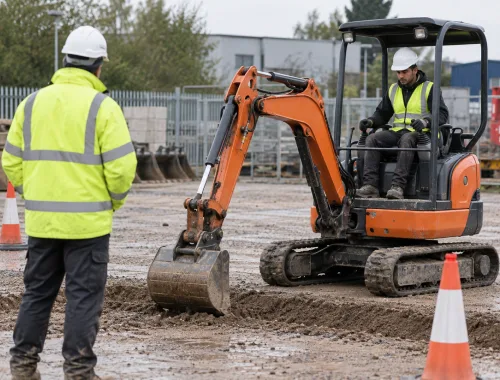
What Real Competence Looks Like Onsite
What Real Competence Looks Like Onsite
Real competence is not something you spot from a card alone—it shows up in the way a person checks equipment, reacts to hazards, follows site systems, and works with control from the first minute of the shift.
That matters across Southall, Heathrow, Hayes, Ealing, and the wider West London area, where busy workplaces depend on operators who can do more than complete a course. Employers want confidence that a person understands the task, the environment, and the standard expected once they are actually on site. For learners, understanding proof of operator competence UK requirements can help you make better decisions about training, refreshers, and the records you keep.
Competence Is Bigger Than Certification
A certificate has value, but it is only one part of the picture.
In practice, competence usually means a combination of training, assessment, practical ability, awareness of site rules, and the judgement to work safely around people, stock, structures, vehicles, and changing conditions. Someone may have completed training in the past, yet still need familiarisation for a new workplace, a refresher after time away from operating, or additional support if the job involves different equipment or a more demanding environment.
This is where many people get confused. They assume that once a course is complete, the question is settled forever. In reality, employers and supervisors often need to look at the wider context: what the person was trained on, how recently they used those skills, what type of setting they are entering, and whether they can operate consistently under normal working pressure.
What Employers Should Actually Look For
When reviewing operator readiness, employers should think beyond a single document and ask practical questions.
Does the person understand daily checks without being prompted? Can they explain the basic risks connected to the equipment they use? Do they show awareness around blind spots, movement routes, pedestrians, load stability, ground conditions, racking, and restricted areas? Are they calm, controlled, and predictable in the way they move?
Those are the signs that competence is becoming real rather than theoretical.
For companies in Southall and nearby industrial areas, this matters because the cost of getting it wrong is never limited to downtime. Poor judgement on site can affect people, stock, vehicles, schedules, and business reputation all at once. That is why good employers look for capability in action, not just paperwork in a file.
The Difference Between Training, Familiarisation, and Authorisation
One reason this topic causes confusion is that different parts of the process are often blended together in conversation.
Training develops knowledge and practical skill. Assessment checks whether the learner can meet the required standard at that stage. Familiarisation helps the person adjust to the actual machine, layout, traffic flow, and procedures at a specific workplace. Authorisation is the employer’s decision to allow that person to operate in that environment.
Each part serves a different purpose.
A learner might complete accredited instruction and still need a proper introduction to a new site in Hayes or Heathrow before they should begin operating there. In the same way, an experienced worker moving between roles may need updated guidance rather than being treated as if nothing has changed. When businesses understand these distinctions, they make safer and more informed decisions.
Why Refresher Training Still Matters
Experience is useful, but experience on its own does not always guarantee good habits.
Over time, people can become overconfident, skip routine checks, or drift into shortcuts that do not match current workplace expectations. Refresher training gives operators the chance to sharpen technique, revisit standards, and correct habits that may have slipped into everyday practice. It can also rebuild confidence for someone returning after a long gap.
This is especially relevant in fast-moving environments around West London, where teams often work under pressure and expectations remain high. A refresher is not a sign of weakness. It is a sign that competence is being maintained properly.
For learners, it is also a smart way to stay prepared. When your knowledge is current and your practical method is clean, you are in a stronger position when applying for new roles or responding to employer checks.
What Good Records Should Show
Strong record-keeping supports trust.
An employer should be able to see what training was completed, when it was completed, what category or equipment it related to, and whether any further familiarisation or internal sign-off has been carried out. Clear records help businesses demonstrate that training decisions were made properly rather than casually.
For individuals, organised records matter too. If you are applying for work in Southall, Ealing, or Hounslow, being able to explain your training background clearly can make a better impression than simply saying you have “done a course before.” Employers notice when someone presents their experience in a professional and straightforward way.
Good providers also make this easier by explaining certification, issuing records properly, and helping learners understand what they should keep for future opportunities.
Real Competence Shows in Behaviour
The strongest proof is often behavioural.
A competent operator does not need constant reminders to slow down, check surroundings, or think ahead. They position themselves properly. They understand why visibility matters. They respect site systems instead of fighting against them. They know when to stop and ask a question rather than guessing.
That kind of behaviour is valuable in every setting, from warehouse operations near Heathrow to active site environments across West London. It also gives employers something more dependable than surface-level confidence. Someone can sound experienced and still operate poorly. Calm, disciplined behaviour is a much better indicator of whether a person is genuinely ready.
How Learners Can Strengthen Their Own Position
If you are a learner or job seeker, there are practical ways to improve how your competence is viewed.
Take training seriously instead of treating it as a box to tick. Ask questions when something is unclear. Build tidy, repeatable habits from the start. Keep your records organised. If you have been away from operating for a while, take a refresher before stepping back into a demanding role. If you move into a different environment, respect the fact that familiarisation still matters.
This approach does more than help with compliance. It also shapes how employers see you. A person who values competence usually stands out quickly because their attitude is different from the beginning.
A Better Standard for West London Workplaces
The best workplaces do not rely on assumptions. They create a culture in which training, assessment, familiarisation, and clear authorisation all matter together. That is how competence becomes visible, measurable, and dependable in everyday operations.
For businesses and learners across Southall, Hayes, Heathrow, Ealing, and nearby areas, understanding the full picture leads to better decisions, better standards, and stronger long-term performance. If you want training that helps build genuine workplace readiness instead of paper-only confidence, Power Forklift Training Ltd can help you take the next step with clarity and purpose.